Introduction
A skylight floods a room with natural light, but it also cuts a hole straight through the most important barrier your home has against the weather: the roof. In Miami, where afternoon thunderstorms and hurricane-force downpours are part of everyday life, a skylight that isn't sealed and flashed perfectly will find a way to leak — and it usually does so at the worst possible moment.
In this guide, we'll explain what causes skylight leaks, the warning signs every Miami homeowner should recognize, how a proper repair is done, what it typically costs, and when replacing the skylight makes more sense than patching it again.
Why Skylights Leak in Miami
Skylights are one of the most leak-prone features of any roof, and South Florida's climate makes them even more vulnerable. The most common reasons a skylight leaks include:
- Failed or worn flashing: The metal flashing that seals the skylight to the roof decking is the first thing to fail. Miami's heat, UV exposure, and salt-laden coastal air cause flashing to corrode, warp, and pull away over time.
- Dried-out sealant: Caulk and sealant around the skylight frame shrink and crack under constant sun and heat cycles, opening tiny gaps for water to seep through.
- Cracked or damaged glass: Impact from debris, hail, or flying branches during a storm can crack the glazing, letting water penetrate directly.
- Improper original installation: A skylight that was set on the wrong curb, flashed incorrectly, or installed without proper underlayment will leak from day one — even if it takes a season or two to show.
- Clogged drainage and debris buildup: Leaves and sediment can dam water around the skylight curb, forcing it to back up under the flashing.
- Condensation buildup: In humid Miami weather, a poorly insulated skylight can sweat, producing moisture that drips and is easily mistaken for a roof leak.
Warning Signs of a Leaking Skylight
Skylight leaks don't always announce themselves with an obvious drip. Watch for these telltale signs:
- Water stains or discoloration on the drywall or ceiling around the skylight opening.
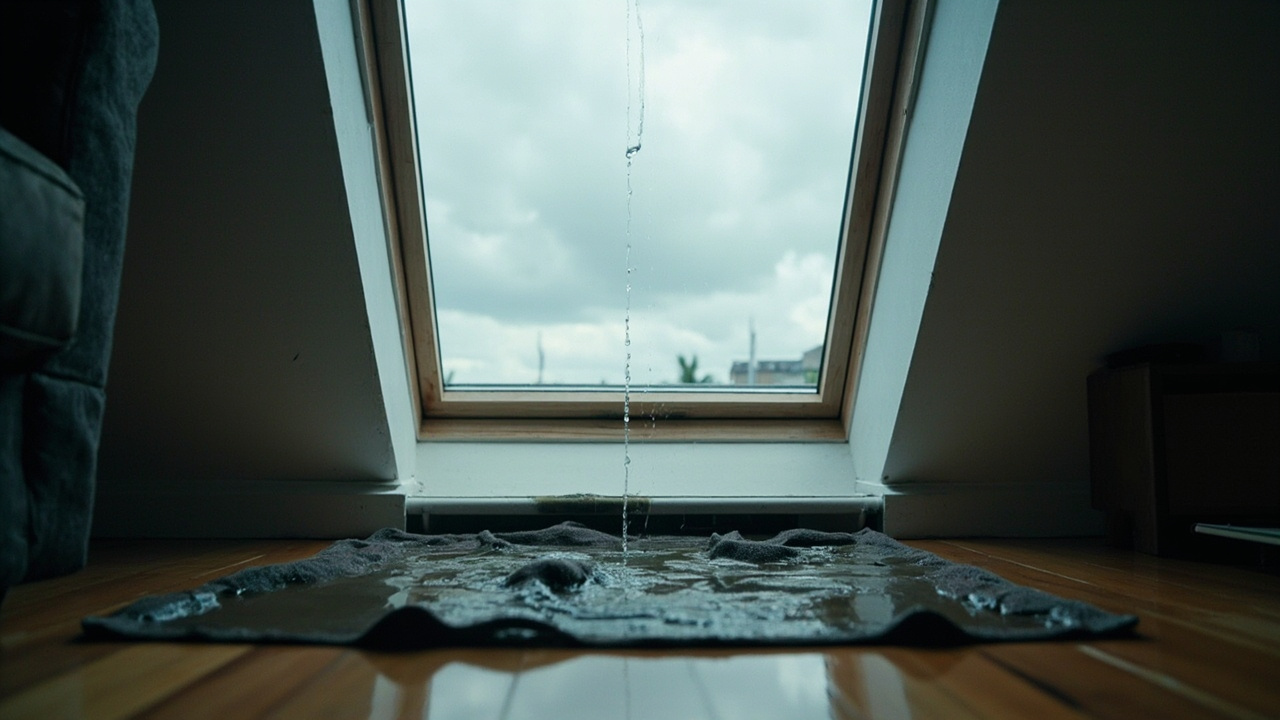
- Visible drips or puddles on the floor beneath the skylight during or after rain.
- Bubbling or peeling paint near the skylight frame.
- Damp or musty odors in the room below, a sign of trapped moisture.
- Condensation between the glass panes, which usually means the skylight's seal has failed.
- Mold or mildew growth on the ceiling or walls near the skylight.
If you notice any of these, don't wait. A skylight leak that's ignored for even a few weeks can rot the surrounding roof decking, ruin insulation, and lead to expensive mold remediation in Miami's humid climate.
How a Professional Skylight Repair Works
Fixing a skylight leak correctly takes more than squirting caulk around the edges. A licensed Miami roofing contractor will typically follow these steps:
- Inspection: Locate the exact source of the leak and determine whether it's the flashing, the seal, the glass, or the curb itself.
- Remove damaged material: Carefully lift surrounding shingles or tile and remove the old, failed flashing and sealant.
- Inspect and repair the decking: Replace any water-damaged or rotted roof sheathing around the opening so the repair sits on a solid foundation.
- Re-flash the skylight: Install new step and counter-flashing, integrated with fresh underlayment, so water flows around and away from the skylight instead of under it.
- Re-seal and reseat: Apply high-quality sealant and reinstall the skylight so it's watertight against wind-driven Miami rain.
- Test: A thorough water test confirms the leak is gone before the crew leaves.
A professional repair addresses the root cause, not just the symptom, so the same leak doesn't return with the next summer storm.
Skylight Repair vs. Replacement
Sometimes a repair is all you need — especially if the skylight is relatively new and the leak is limited to worn flashing or dried sealant. But if any of the following apply, replacement is usually the smarter, more cost-effective choice:
- The skylight is 15 to 20 years old or older and nearing the end of its lifespan.
- The glass is cracked or the seal between panes has failed.
- The frame or curb is rotted or structurally damaged.
- You've had repeated leaks despite previous repairs.
A reputable contractor will give you an honest assessment either way — and in Miami, a well-installed impact-rated skylight can also improve energy efficiency and hurricane protection.
Skylight Leak Repair Cost in Miami
Skylight repairs are typically more affordable than a full replacement — especially compared to the cost of the water damage they prevent. Pricing depends on the type of skylight, the extent of the damage, and accessibility:
- Minor reseal or flashing touch-up: Most Miami homeowners spend roughly $250 to $600 for a localized sealant or small flashing repair.
- Full re-flash and reseal: A more involved repair with new flashing, underlayment, and sealant typically runs $600 to $1,200.
- Repairs with decking replacement: If water has rotted the surrounding roof sheathing, expect the total to climb to $1,200 to $2,500+ depending on how much decking must be replaced.
- Full skylight replacement: Replacing an old or cracked skylight with a new impact-rated unit generally starts around $1,500 to $3,500+ installed, depending on size and glass type.
Keep in mind that a recurring skylight leak on an aging roof can be a sign that the surrounding roof is also failing. A professional inspection will help you decide whether to repair, replace, or address the roof itself.
Preventing Future Skylight Leaks
Once your skylight is repaired, a little maintenance goes a long way toward keeping it watertight for years:
- Keep the area clear: Trim overhanging branches and clear leaves and debris from around the skylight at least twice a year and after every major storm.
- Schedule annual inspections: A professional roof and skylight inspection before hurricane season can catch worn flashing and cracked sealant early.
- Check after storms: After any high-wind event, have the skylight and flashing inspected for lifted metal or cracked glazing.
- Re-seal proactively: Have the skylight re-sealed every few years to stay ahead of Miami's relentless heat and UV exposure.
In a climate like Miami's, prevention is far cheaper than the water damage a neglected skylight can cause.
Conclusion
A leaking skylight is a common but serious problem for Miami homeowners — and one that only gets more expensive the longer it's ignored. By understanding the causes, recognizing the warning signs, and acting quickly, you can protect your home, your belongings, and your peace of mind.
At All Pro Roofing & Windows Miami, we've repaired and replaced countless skylights across Miami-Dade, Broward, and Monroe County. We're fully licensed (CCC1333865 and CGC1525217), fully insured, and we stand behind our work. If you suspect a skylight leak — or just want a professional inspection before the next storm — call us at 305-707-8451 or visit www.allprocontractorsgroup.com today.
#itpaystogowiththepros