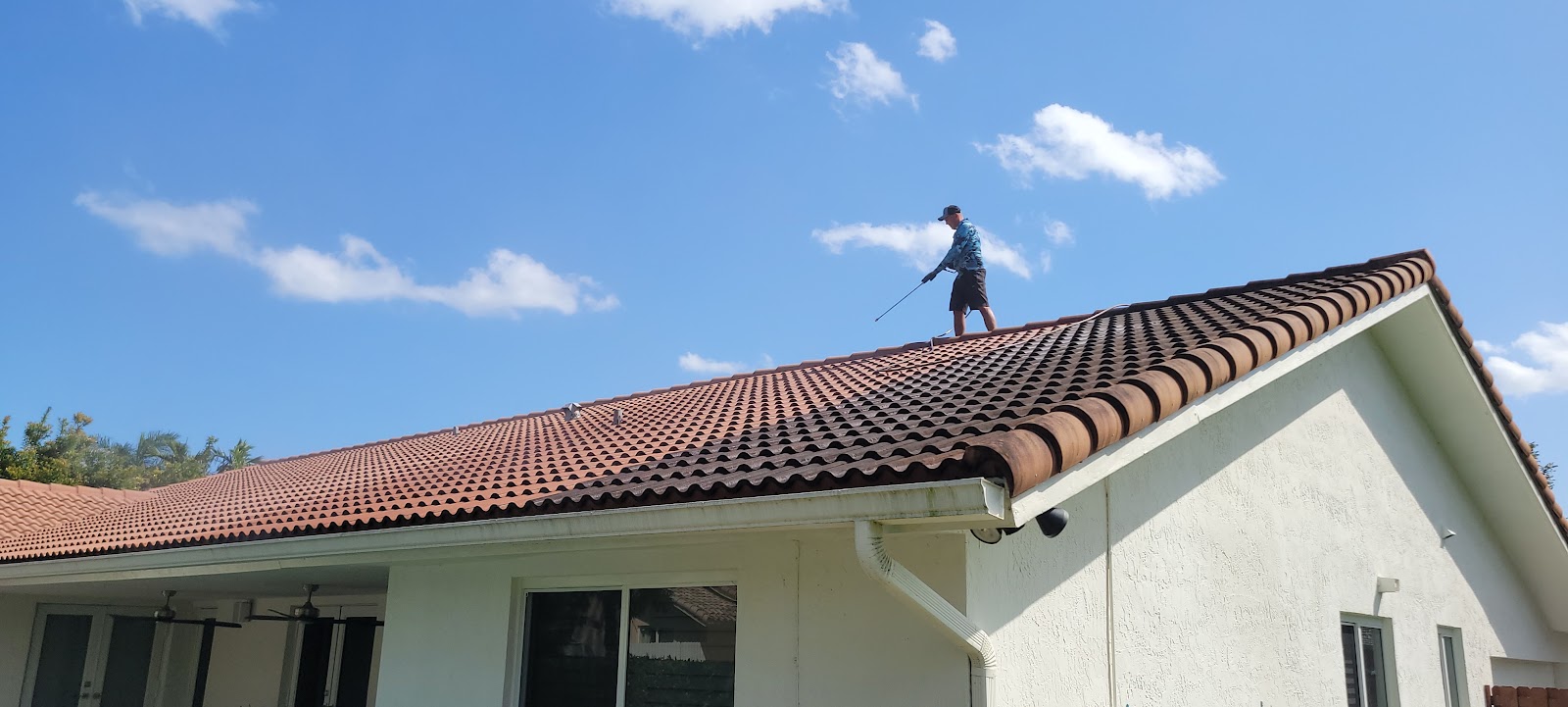
Introduction
Drive through almost any Miami neighborhood and you'll spot it on dozens of roofs: ugly black streaks running down the slopes, staining what should be a clean, attractive roofline. Homeowners often assume it's dirt, soot, or even mold. The truth is usually something else entirely — a stubborn, blue-green algae called Gloeocapsa magma that thrives in our hot, humid, coastal climate.
Those streaks aren't just a cosmetic problem, and they won't wash off with rain. In this guide, we'll explain exactly what roof algae is, why it's so common in South Florida, how to remove it safely, and what it costs — so you can restore your roof's appearance without accidentally damaging it in the process.
What Are Those Black Streaks on My Roof?
The black staining you see on shingle and tile roofs across Miami is almost always roof algae. Specifically, it's a type of cyanobacteria that feeds on the limestone filler used in asphalt shingles. As the algae spreads, it produces a dark, protective pigment that shields it from the sun's UV rays — which is why the streaks look black and only get worse over time.
Roof algae is especially aggressive in warm, humid environments with frequent rainfall, which makes Miami and the rest of South Florida a perfect breeding ground. Homes shaded by trees, facing north, or located near the coast tend to develop it fastest, because those surfaces stay damp longer after a rain shower or heavy morning dew.
Is Roof Algae Harmful to My Roof?
The good news is that roof algae doesn't eat or rot your shingles the way wood-destroying fungus does. The bad news is that it isn't harmless, either. Here's what an algae-covered roof can mean for your home:
- Reduced curb appeal and resale value: Stained roofs look older and neglected, which can turn off buyers and lower your home's perceived value.
- Trapped moisture: Algae holds moisture against the roof surface, which can accelerate the breakdown of shingle granules and shorten the life of your roof over many years.
- Higher cooling costs: Dark streaks absorb more heat than a clean, lighter roof surface, which can slightly increase your cooling load during Miami's brutal summers.
- A sign of aging materials: Persistent algae growth can signal that your shingles are losing their protective granules and nearing the end of their useful life.
Bottom line: algae itself won't destroy your roof overnight, but ignoring it can shave years off your roof's lifespan and hurt your home's appearance and value.
Why DIY Pressure Washing Is a Bad Idea
When homeowners first notice black streaks, the instinct is to grab a pressure washer and blast them off. Please don't. High-pressure washing is one of the fastest ways to ruin a roof in Miami. The concentrated force strips the protective granules right off asphalt shingles, tears at aging tile, and can force water up under flashing and into your attic.
A pressure-washed roof often looks clean for a few weeks — then comes back worse, because the exposed shingle surface is now more porous and even more inviting to algae regrowth. It can also void your shingle manufacturer's warranty, leaving you on the hook for damage the washing caused. Safe roof cleaning is about the right method and the right chemicals, not raw water pressure.
The Right Way to Clean Roof Algae: Soft Washing
Professional roof cleaners in Miami use a technique called soft washing — low-pressure application of a diluted cleaning solution (typically a sodium hypochlorite blend combined with surfactants) that kills the algae at its roots. The solution is applied gently, allowed to dwell so it can penetrate and destroy the algae, then rinsed away with low-pressure water.
Soft washing works for a few key reasons:
- It kills, not just removes: The solution eliminates the algae down to the root, so streaks don't immediately return.
- It protects your roof: Low pressure means no granule loss, no lifted shingles, and no forced water intrusion.
- It's long-lasting: A proper soft-wash treatment can keep your roof clean for two to three years, sometimes longer.
- It's safe for landscaping: Professional crews pre-wet and cover plants, then neutralize the runoff to protect your yard.
If you want results that last without damaging your roof, soft washing is the only method worth considering.
How Much Does Roof Cleaning Cost in Miami?
Roof cleaning in South Florida is typically priced by the square foot or as a flat rate based on roof size and pitch. Most Miami homes fall somewhere between roughly $350 and $700 for a full soft-wash treatment, though larger, steeper, or multi-story roofs can run higher. Tile roofs may cost slightly more than shingle roofs because they require more care and longer dwell times.
The final price depends on the size of your roof, how steep it is, how much algae has built up, and whether you're bundling cleaning with other services. Always get a clear, written quote and confirm that the company uses soft washing — not high-pressure washing — before you agree to anything.
How to Prevent Black Streaks from Coming Back
While you can't make roof algae disappear forever in Miami's climate, you can dramatically slow its return. Here's what helps:
- Schedule regular cleaning: A soft-wash treatment every two to three years keeps algae from ever getting a foothold.
- Trim overhanging branches: More sunlight and airflow means faster drying and less algae-friendly moisture.
- Keep gutters clear: Clogged gutters trap water and debris against the roof edge, creating a damp breeding zone.
- Consider algae-resistant shingles: If you're due for a replacement, modern shingles with copper or zinc granules resist algae growth for years.
- Improve attic ventilation: A cooler, drier roof surface is far less hospitable to algae.
These simple habits won't just keep your roof looking great — they'll help it last longer and perform better through Miami's long, hot, storm-prone seasons.
Conclusion
Those black streaks on your Miami roof aren't something you have to live with. They're caused by stubborn, humidity-loving algae that soft-wash cleaning can remove safely and effectively — without the shingle damage and warranty void that comes from pressure washing. With regular maintenance, you can keep your roof clean, protect its lifespan, and boost your home's curb appeal all at once.
At All Pro Roofing & Windows Miami, we know South Florida roofs inside and out. Our team is fully licensed (CCC1333865 and CGC1525217) and serves homeowners across Miami-Dade, Broward, and Monroe County with honest assessments, quality workmanship, and roof care done the right way. If your roof is streaked, stained, or just due for a checkup, call us at 305-707-8451 or visit www.allprocontractorsgroup.com to schedule your free inspection today.
#itpaystogowiththepros