Introduction
When a storm tears shingles off your roof or a fallen branch punches a hole through the decking, every hour you wait puts your home at risk. Rain finds its way into attics, insulation, drywall, and electrical systems fast — and the longer water sits, the more expensive the damage becomes. That's where emergency roof tarping comes in.
Emergency tarping is a fast, temporary fix that seals the damaged area until permanent repairs can be scheduled. In this guide, we'll explain what roof tarping is, why speed matters, what it typically costs in Miami, how it protects your insurance claim, and how to get professional help right away.
What Is Emergency Roof Tarping?
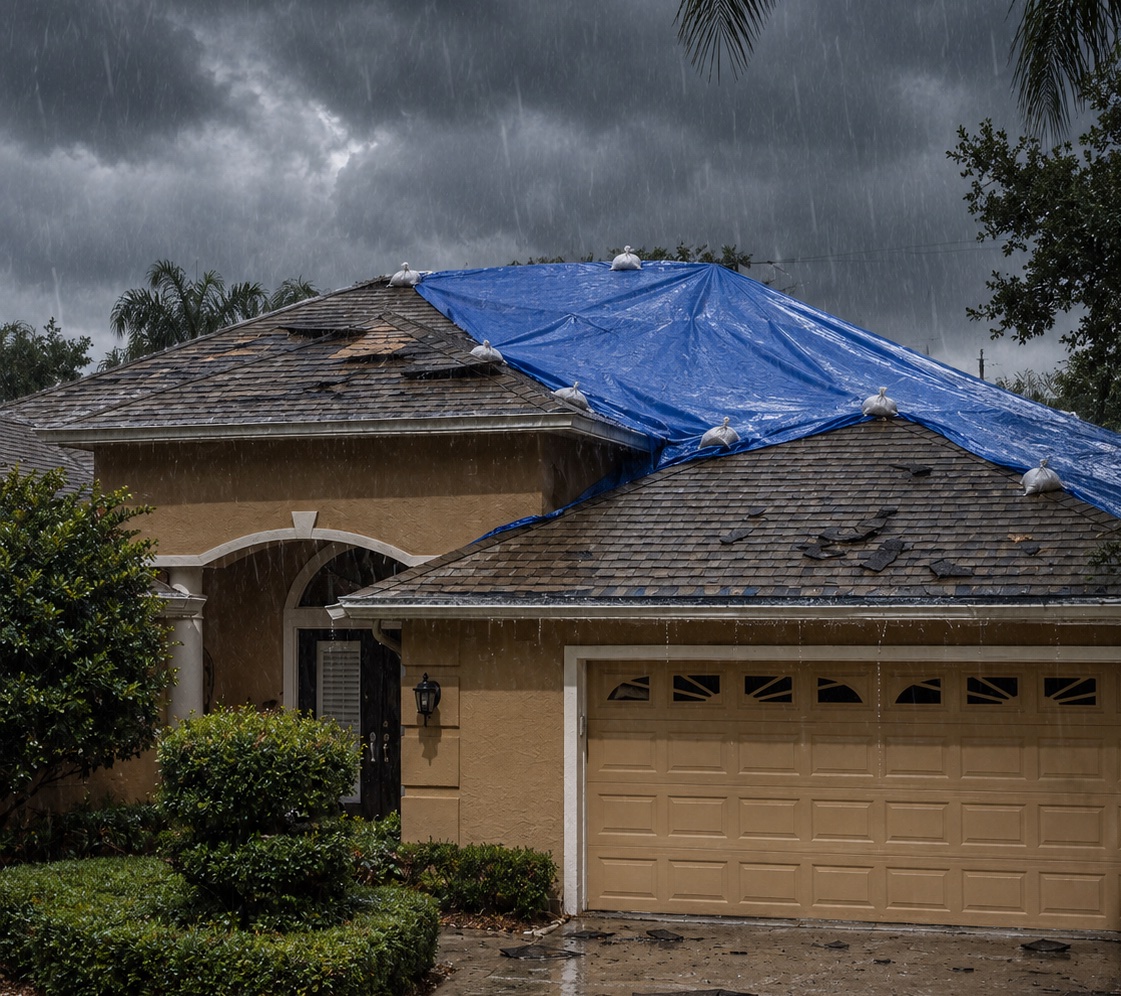
Roof tarping is the process of securing a heavy-duty, waterproof tarp over a damaged section of roofing to stop water from entering your home. It's a temporary measure — not a permanent repair — but it's often the single most important step you can take in the hours after a storm.
A proper tarp job includes more than just throwing a blue cover over the hole. A professional crew will:
- Assess the full extent of the damage to identify every compromised area, not just the most obvious one.
- Clear loose debris and broken shingles so the tarp lies flat and seals correctly.
- Anchor the tarp securely using boards, screws, and roofing nails so high winds can't rip it loose.
- Seal the edges and valleys where water is most likely to channel underneath.
Done correctly, a temporary tarp can keep your home dry for weeks — long enough to get a permanent repair or full roof replacement scheduled and permitted.
Why Speed Matters After Storm Damage
In Miami's climate, a damaged roof doesn't stay a small problem for long. Even a small opening can let in significant water during the frequent afternoon thunderstorms and passing squalls that hit South Florida year-round.
- Secondary water damage: Water that gets past the roof soaks insulation, stains ceilings, warps drywall, and can reach wiring and framing.
- Mold growth: Miami's heat and humidity create ideal conditions for mold, which can begin growing within 24 to 48 hours of a leak.
- Structural weakening: Prolonged moisture can rot roof decking and weaken the framing that supports your entire roof.
- Insurance complications: Most policies require you to take reasonable steps to prevent further damage. Waiting too long to tarp can become a point of contention in your claim.
The bottom line: tarping fast protects both your home and your claim.
How Emergency Roof Tarping Protects Your Insurance Claim
One of the most common mistakes Miami homeowners make after storm damage is skipping the temporary fix. Your homeowners policy includes a duty to "mitigate damages" — meaning you're expected to prevent the situation from getting worse while your claim is processed.
- Document everything: Take photos of the damage before tarping begins, and keep your receipts. Tarping costs are typically reimbursable as part of your claim.
- Prevent further damage: Insurance adjusters look for signs that secondary damage was preventable. A tarped roof shows you acted responsibly.
- Keep a paper trail: Record the date, the scope of the tarp work, and who performed it. This documentation strengthens your position.
Working with a licensed contractor who understands the claims process can make a big difference here. The right company will help you document the damage properly and can often coordinate directly with your adjuster.
What Does Emergency Roof Tarping Cost in Miami?
Tarping is one of the most affordable roof services you'll ever pay for — especially compared to the cost of the water damage it prevents. Pricing varies based on the size of the damaged area, the roof's pitch, and how accessible it is:
- Small, single-area tarp jobs: Most homeowners in Miami-Dade spend roughly $250 to $600 for a straightforward temporary tarp over a localized area.
- Larger or multi-area damage: If multiple sections are compromised, or the roof is steep and hard to access, costs can run $600 to $1,500 or more.
- After major storms: During high-demand periods, prices can rise and availability tightens, which is another reason to act quickly.
Remember, tarping costs are frequently reimbursed by your insurer, so don't let the upfront price delay a critical fix. A reputable company will give you clear, written pricing before any work begins.
Tarping vs. Permanent Repair: What Comes Next?
A tarp is a bridge, not a destination. Once your home is protected, the next step is a professional inspection to determine the scope of the permanent repair. In many cases, storm damage to an aging roof means a full replacement makes more financial sense than a patch.
- Inspection and estimate: A licensed contractor will inspect the decking, underlayment, and structure to recommend the right fix.
- Insurance coordination: Your contractor can help you work through the claim so the permanent repair is approved and funded properly.
- Scheduling: Once the claim is moving, the tarp comes off and the permanent repair or replacement begins.
Choosing a contractor who can handle both the emergency tarping and the permanent repair keeps the process simple and avoids finger-pointing between multiple companies.
Why Choose a Licensed Contractor for Tarping
After a storm, out-of-town "storm chasers" flood the market, and it can be tempting to hire whoever shows up first. But tarping your roof is a safety-critical job that deserves a licensed, insured, local professional:
- Florida licensing and insurance: Verify the contractor's license and confirm they carry workers' compensation and liability coverage.
- Local experience: A Miami-based contractor understands local codes, permitting, and the region's specific wind and rain conditions.
- Proper anchoring: An improperly secured tarp can blow loose in the next storm and cause more damage — and become a dangerous projectile.
- No deposit games: Be wary of anyone demanding large cash deposits upfront or pressuring you to sign before you've seen a written estimate.
Conclusion
Emergency roof tarping is the fastest, smartest way to protect your Miami home in the critical hours and days after storm damage. It stops water intrusion, prevents mold and structural decay, and protects your insurance claim — all for a modest cost that's typically reimbursable.
At All Pro Roofing & Windows Miami, we provide fast, professional emergency roof tarping across Miami-Dade, Broward, and Monroe County. We're fully licensed (CCC1333865 and CGC1525217), fully insured, and ready to respond when you need us most. If your roof has been damaged, don't wait — call us at 305-707-8451 or visit www.allprocontractorsgroup.com and we'll get your home protected right away.
#itpaystogowiththepros