Introduction
Miami homeowners know the drill: the sun beats down nearly year-round, air conditioners run non-stop, and monthly energy bills can spiral out of control. But what if your roof could help fight back? That is exactly what cool roof technology does. A cool roof installation in Miami Florida can dramatically reduce the amount of heat your home absorbs, keeping indoor temperatures lower and slashing your cooling costs.
In this guide, we'll break down everything you need to know about cool roofing in South Florida — from how it works and what materials qualify, to Florida-specific building codes, costs, energy savings, and how to find the right contractor for the job.
What Is a Cool Roof and How Does It Work?
A cool roof is designed to reflect more sunlight and absorb less heat than a standard roof. While a traditional dark asphalt shingle roof can reach temperatures of 150°F to 180°F under the Miami sun, a cool roof stays significantly cooler — often 50°F to 60°F lower. The key lies in two properties:
- Solar Reflectance (SR): The ability to reflect sunlight, including visible, infrared, and ultraviolet wavelengths. Higher reflectance means less heat enters your home.
- Thermal Emittance (TE): The ability to release absorbed heat back into the atmosphere rather than radiating it into your attic and living spaces.
Cool roofing materials are engineered with reflective pigments, specialized coatings, or naturally reflective surface properties. Even light-colored materials like white TPO membranes and certain tile colors can qualify as cool roofs when rated properly.
Why Cool Roofs Matter in Miami, Florida
Miami is one of the hottest metropolitan areas in the United States, with average summer highs in the low 90s and heat indexes frequently exceeding 100°F. Add in the urban heat island effect — where dense construction and dark surfaces make cities hotter than surrounding areas — and your roof can become a heat magnet. Here is why Miami homeowners are increasingly turning to cool roof installation:
- Lower Energy Bills: A cool roof can reduce air conditioning demand by 10% to 20% during peak summer months, according to the U.S. Department of Energy. For Miami homeowners who run AC 10+ months a year, those savings compound significantly.
- Extended Roof Lifespan: Less thermal stress and reduced temperature swings mean less expansion and contraction, which can extend the life of your roofing materials by years.
- Improved Indoor Comfort: Rooms that aren't directly air-conditioned — like garages, covered patios, and bonus spaces — stay noticeably cooler under a reflective roof.
- Environmental Impact: Lower energy consumption reduces greenhouse gas emissions, and cooler roof surfaces help mitigate the urban heat island effect across Miami-Dade County.
Types of Cool Roofing Materials Available in Florida
Not all cool roofs are created equal, and the best choice depends on your home's architecture, your budget, and your aesthetic preferences. Here are the most popular cool roofing options for Miami-area homes:
1. Cool Asphalt Shingles
Modern cool asphalt shingles incorporate solar-reflective granules that bounce back a significant portion of the sun's rays. They look like traditional shingles but come in lighter colors designed to meet ENERGY STAR requirements. Brands like GAF Timberline Cool Series and Owens Corning Cool Roof Collection are widely available in Florida.
2. White TPO and PVC Membranes
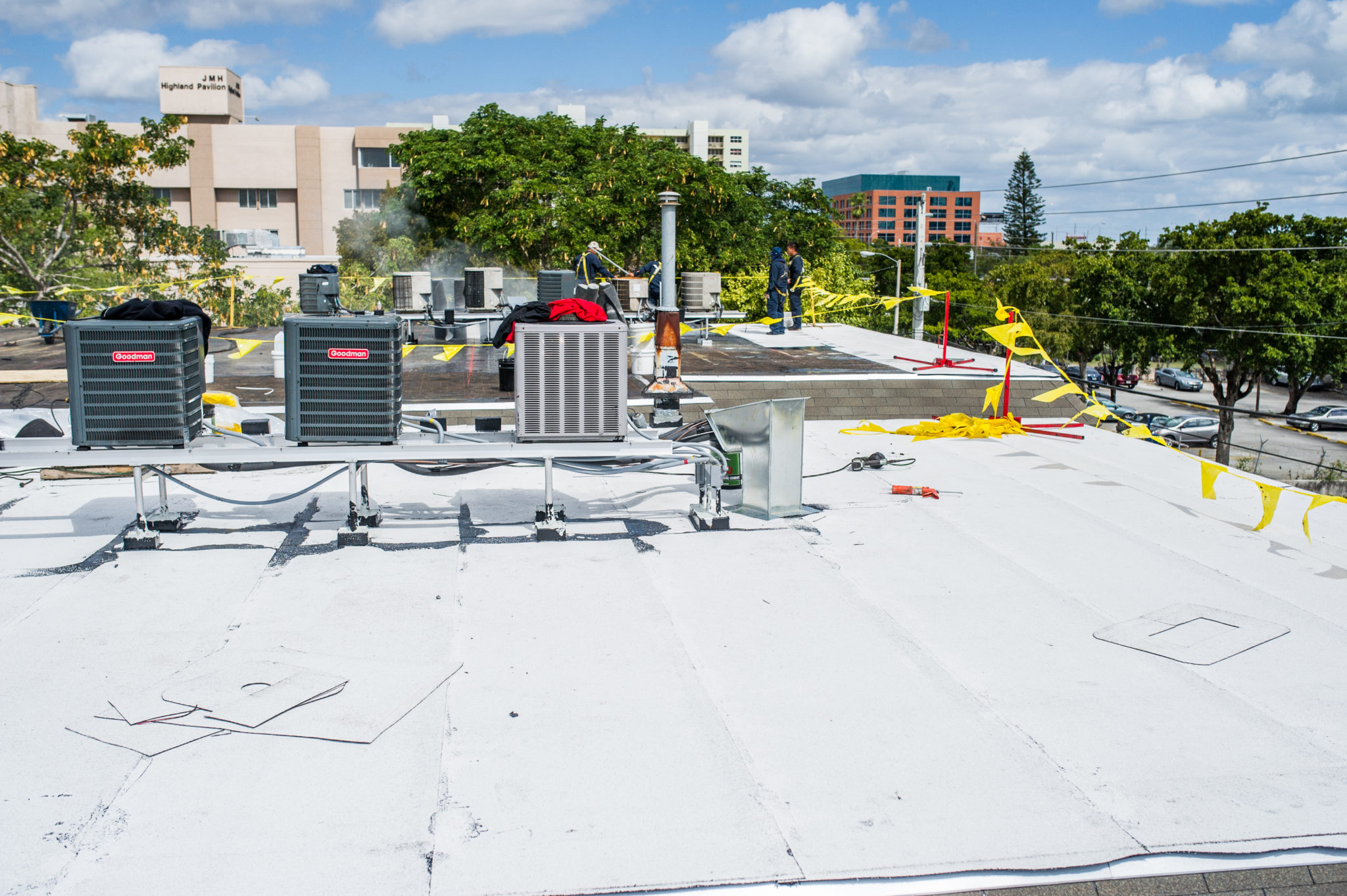
For flat or low-slope roofs — common on mid-century Miami homes and commercial buildings — white thermoplastic membranes (TPO and PVC) are among the most reflective options available. These single-ply membranes naturally reflect sunlight and are highly durable against Florida's intense UV exposure.
3. Cool Metal Roofing
Metal roofs with reflective paint finishes or factory-applied cool coatings can achieve excellent solar reflectance. Standing seam metal roofs in light colors or with specialized Kynar 500 coatings are a premium choice that combines hurricane resistance with energy efficiency.
4. Cool Tile Roofing
Clay and concrete barrel tiles are already a popular choice in Miami's Spanish-style homes. Light-colored or white-glazed tiles with reflective properties qualify as cool roofs while maintaining the classic South Florida aesthetic. Some manufacturers offer tiles with cool pigments that retain color while boosting reflectance.
5. Reflective Roof Coatings
If your existing roof is in good condition, you may not need a full replacement. Acrylic, silicone, and elastomeric roof coatings can be applied over many existing roof types to boost reflectivity. This is a cost-effective way to convert a standard roof into a cool roof without a complete tear-off.
Florida Building Code and Cool Roof Requirements
Florida's building code has been updated to address energy efficiency and cool roofing. Under the Florida Energy Conservation Code (based on the International Energy Conservation Code), new residential construction and certain re-roofing projects must meet minimum solar reflectance and thermal emittance standards — especially in Climate Zone 1, which covers Miami-Dade County.
Key requirements include:
- Minimum Solar Reflectance Index (SRI): Roofing materials in Miami-Dade must meet a minimum SRI rating. For low-slope roofs (≤2:12 pitch), the threshold is typically higher than for steep-slope roofs.
- Prescriptive Compliance Path: Florida offers a prescriptive energy code path where installing a cool roof can help offset other efficiency requirements.
- Product Approval: All roofing materials used in Miami-Dade County must have a Notice of Acceptance (NOA) from the county. This applies to cool roofing products as well — always verify your contractor is using approved materials.
- ENERGY STAR Certification: While not strictly required by code, ENERGY STAR-rated cool roof products are the industry benchmark and often qualify for utility rebates and insurance discounts.
How Much Does Cool Roof Installation Cost in Miami?
The cost of a cool roof installation in Miami Florida varies depending on the material, roof size, and complexity of the job. Here are rough estimates for a typical 2,000-square-foot residential roof:
- Cool Asphalt Shingles: $6,000 – $12,000 installed
- White TPO/Flat Roof: $8,000 – $16,000 installed
- Cool Metal Roofing: $14,000 – $28,000 installed
- Cool Tile Roofing: $16,000 – $32,000 installed
- Reflective Roof Coating: $2,500 – $6,000 (applied over existing roof)
The upfront cost of a cool roof is often comparable to or slightly higher than a conventional roof made from the same material class. However, the long-term energy savings — potentially $200 to $500 per year in South Florida — combined with extended roof lifespan and potential insurance credits can deliver a strong return on investment.
Potential Rebates, Tax Credits, and Insurance Discounts
Miami homeowners may be able to offset the cost of cool roof installation through several programs:
- FPL and Local Utility Rebates: Florida Power & Light and other utilities occasionally offer rebates for energy-efficient home improvements, including cool roofs. Check current offerings before beginning your project.
- Federal Tax Credits: While federal solar tax credits don't directly cover cool roofs, certain reflective roofing systems that integrate with solar panels may qualify under broader energy efficiency provisions. Consult a tax professional for the most up-to-date guidance.
- Homeowners Insurance Discounts: Some Florida insurers offer premium reductions for homes with cool roofs, since reduced thermal stress can lower the risk of storm-related roof failure. Ask your insurance agent about available wind mitigation and energy efficiency credits.
- Property Assessed Clean Energy (PACE): Miami-Dade County participates in PACE financing programs, which allow homeowners to finance energy-efficient improvements — including cool roofs — through property tax assessments with no upfront payment.
Choosing the Right Cool Roof Contractor in Miami
A cool roof is only as effective as its installation. When selecting a contractor for your cool roof project, look for:
- Miami-Dade County License and Insurance: Roofing contractors in Miami-Dade must carry a valid county license, plus general liability and workers' compensation insurance. Never hire an unlicensed roofer.
- Experience with Cool Roof Products: Ask about specific cool roof installations they've completed and which brands they recommend for Florida's climate.
- Manufacturer Certifications: Certified installers for brands like GAF, CertainTeed, and Owens Corning have demonstrated competence and often provide extended warranties.
- Detailed Written Estimates: A professional contractor will provide a comprehensive estimate that specifies the exact materials, SRI ratings, warranty terms, and timeline.
- References and Reviews: Check Google reviews, the Better Business Bureau, and ask for local references from recent cool roof installations.
Maintaining Your Cool Roof for Maximum Efficiency
To keep your cool roof performing at its peak, schedule regular maintenance:
- Annual Inspections: Have your roof inspected at least once a year, ideally before hurricane season, to check for debris buildup, coating degradation, or damage that could compromise reflectivity.
- Keep It Clean: Dirt, algae, and mildew can reduce solar reflectance over time. A professional roof cleaning every two to three years helps maintain cool roof performance — especially on white or light-colored surfaces.
- Address Repairs Quickly: Any damage to the roof surface, whether from fallen branches or wind-driven debris, should be repaired promptly to prevent water intrusion and maintain the reflective integrity of the surface.
- Recoat When Needed: If your cool roof uses a reflective coating, expect to recoat every 10 to 15 years depending on the product and exposure conditions.
Conclusion
A cool roof installation in Miami Florida is one of the smartest investments a homeowner can make. It cuts energy bills, keeps your home more comfortable, extends the life of your roof, and helps reduce the urban heat burden across our community. Whether you choose cool shingles, a white membrane system, metal roofing, or a reflective coating, the key is working with a knowledgeable, licensed Miami roofing contractor who understands Florida's unique climate and building codes.
At All Pro Contractors, we bring years of South Florida roofing experience to every job. We can help you evaluate your options, navigate Miami-Dade County requirements, and install a cool roof that performs for decades. Ready to start saving? Call us at 305-707-8451 or visit our website to schedule a free consultation and roof inspection.
#itpaystogowiththepros