Get a Free inspection when you sign up.
Best Roof Underlayment for Miami Homes: What to Choose for Heat, Rain, and Hurricanes
Miami roofs last longer when the waterproofing beneath the surface is chosen for South Florida heat, rain, wind-driven storms, and real-world installation quality.
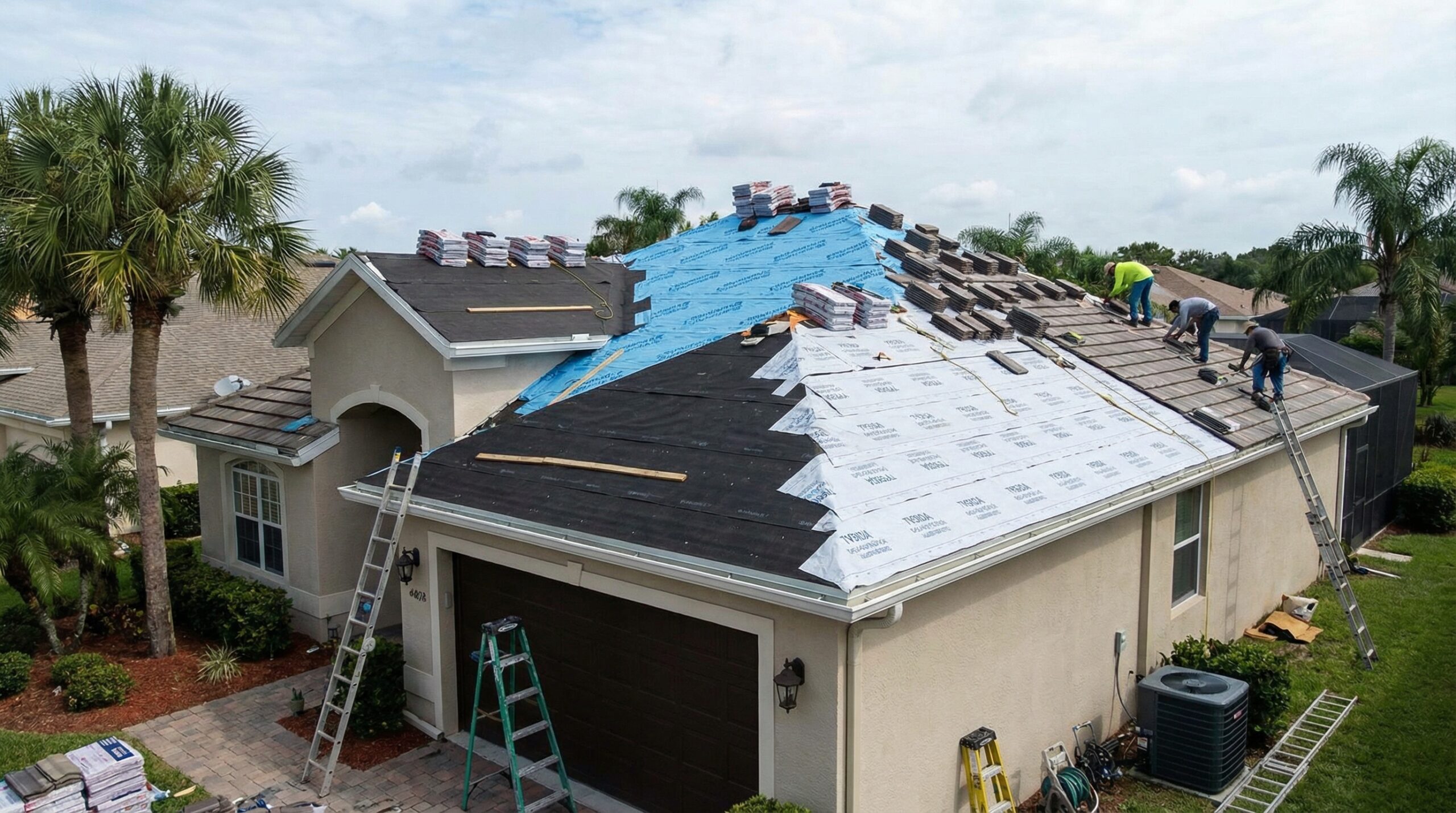
If you are searching for the best roof underlayment for Miami homes, you are asking one of the smartest roofing questions a South Florida homeowner can ask. Most people focus on shingles, tile color, or how the finished roof will look from the street. What many homeowners do not realize is that the underlayment below the visible roof covering does a huge share of the work when Miami weather turns aggressive. It helps block wind-driven rain, adds a second layer of protection if tiles shift or shingles lift, and supports the long-term performance of the full roofing system.
In Miami-Dade, Broward, and Monroe County, roofs deal with punishing UV exposure, heavy summer rain, high humidity, salt air in coastal areas, and the annual pressure of hurricane season. That means underlayment is not a throwaway line item in an estimate. It is one of the core decisions that affects leak resistance, service life, and how well your roof performs when conditions get rough. Here is what homeowners should know before choosing a system.
Why underlayment matters so much in Miami
Roof underlayment sits between the roof deck and the finished roofing material. In simple terms, it is the protective layer that helps manage water if the outer roof covering is damaged, aging, or temporarily overwhelmed. In a climate like Miami, that backup protection matters because storms rarely fail in a neat way. Water can be pushed sideways by wind, driven uphill around flashing, or forced into weak spots around penetrations, valleys, and transitions.
That is why the best roof underlayment for Miami homes needs to do more than look good on a spec sheet. It should handle moisture, heat, fast installation, and long-term durability. It also needs to match the type of roof you have. The right choice for a shingle roof is not always the same as the right choice for a tile roof.
The main underlayment options homeowners will hear about
Most homeowners in South Florida will hear three categories during the quoting process: traditional felt, synthetic underlayment, and self-adhered peel-and-stick membranes.
Traditional felt underlayment is the older option many homeowners recognize. It has been used for years and may still appear on budget-minded proposals. While it can perform in some applications, it is usually not the first recommendation for homeowners who want stronger long-term performance in Miami’s climate.
Synthetic underlayment has become a popular choice because it is lightweight, durable, and generally more stable during installation. It tends to resist tearing better than older felt products and can be a strong fit for many modern shingle systems.
Peel-and-stick underlayment, also called self-adhered underlayment, creates a more sealed layer because it bonds directly to the roof deck. In South Florida, many homeowners like it because it adds a higher level of water resistance and a more secure secondary barrier when installed correctly.
Best underlayment for Miami shingle roofs
For many asphalt shingle homes, synthetic underlayment is often the practical sweet spot. It offers solid durability, handles jobsite conditions well, and supports efficient installation. For homeowners replacing an aging shingle roof, synthetic underlayment is often a clear upgrade over older felt-based systems.
That said, not every home has the same risk profile. If your roof has low-slope sections, vulnerable transitions, or a leak history, a higher-performance approach may be worth discussing. Miami homeowners should ask whether the proposal includes upgraded protection in valleys, around penetrations, and in areas that tend to collect water pressure during storms.
A good shingle roof quote should not just say “underlayment included.” It should explain what type is being installed, how it works with the full system, and whether the contractor is building the roof around Miami conditions instead of generic national assumptions.
Best underlayment for Miami tile roofs
Tile roofs are common across South Florida because they look great, hold up well in heat, and match many of the area’s architectural styles. But tile roofs also place a lot of importance on the underlayment because the tile itself is not the primary waterproof layer. The tile sheds water and protects the system from sun exposure, but the underlayment underneath plays a major role in keeping the home dry.
That is why many Miami tile roof replacements lean toward more robust underlayment solutions, especially when homeowners want stronger backup protection and longer-term confidence. On tile projects, underlayment quality is not the place to cut corners. If the visible tile still looks fine but the underlayment below has aged out, leaks can begin long before a homeowner expects them.
If you have a tile roof, ask how the contractor is addressing deck condition, flashing details, valleys, penetrations, and the compatibility of the underlayment with your roof design. A premium tile roof deserves a premium waterproofing plan underneath it.
Synthetic vs peel-and-stick: which is better?
For homeowners comparing synthetic vs peel-and-stick underlayment in Miami, the best answer is usually: it depends on the roof, the budget, and the protection goals.
Synthetic underlayment is often the value-minded performance option. It is a strong fit for many shingle projects and for homeowners who want a meaningful upgrade without pushing the project cost as high as a more premium self-adhered system.
Peel-and-stick underlayment is often chosen when homeowners want a more aggressive moisture barrier, especially on higher-end systems or roofs where extra protection is worth the investment. Many Miami homeowners like it for the added confidence it brings during storm season.
The key is not choosing a buzzword. The key is matching the underlayment to your roof type, exposure, and long-term goals. A trustworthy Miami roofing contractor should be able to explain why a system is being recommended for your specific home instead of pitching the same answer to everyone.
What homeowners should ask before signing a roofing proposal
If you want the best roof underlayment for your Miami home, ask direct questions:
- What exact underlayment product or category is included?
- Is the recommendation different for tile versus shingle?
- How does the system handle wind-driven rain and high heat?
- Are vulnerable areas receiving upgraded protection?
- Does the proposal clearly explain flashing, valleys, and penetrations?
- Will the finished system support long-term leak resistance instead of just passing a basic install checklist?
These questions matter because roofing proposals can look similar on the surface while hiding big differences in material quality. Two bids may both say “new roof,” yet one may include a much better waterproofing approach below the finished surface.
When it makes sense to upgrade underlayment
Homeowners often think about underlayment only when they are replacing the full roof, but there are clear situations where upgrading the underlayment should be part of the conversation. If your roof is older, if you have recurring leaks, if you are switching materials, or if your current system has been stressed by multiple storm seasons, it is worth asking whether your existing waterproofing approach is still the right fit.
This is especially important on older Miami homes where the visible roof surface may not tell the whole story. Underlayment can age from heat, moisture exposure, and time. Even when the outer roof covering still looks acceptable from the ground, the real weak point may be underneath.
The bottom line for Miami homeowners
The best roof underlayment for Miami homes is the one that matches your roof system, your property’s exposure, and your expectations for long-term protection. For many homeowners, synthetic underlayment is a smart performance upgrade. For others, especially on premium or high-risk roofs, peel-and-stick may be the better investment. The right answer comes from a careful inspection and a contractor who explains the full system instead of selling only the visible finish.
If you are planning a roof replacement in Miami-Dade, Broward, or Monroe County, contact All Pro Contractors for a professional evaluation. We help homeowners choose roofing systems built for South Florida conditions, premium craftsmanship, and dependable storm-season performance.
FOLLOW US


Navigation
Services
LEGAL
OUR CERTIFICATIONS
Copyright 2026. All Pro Contractors Inc License No CGC1525217 & CCC1333865. All Rights Reserved.