Introduction
If you are searching for the best roof coating for flat roofs in Miami, you are probably trying to solve one of a few common problems. Maybe your roof is aging but not ready for full replacement. Maybe you have small leaks, surface wear, harsh sun exposure, or ponding concerns that make you wonder whether a coating can buy you more time. In South Florida, flat roofs take a beating from intense UV, heavy rain, standing water, humidity, and hurricane-season stress. That is why coatings come up so often in conversations about extending roof life.
The important part is knowing that not every flat roof is a good candidate for coating, and not every coating performs the same way in Miami weather. A coating can be a smart investment when the roof structure is still in decent condition and the system is properly prepared. It can also be the wrong move if the roof has deeper moisture damage, major seam failure, or drainage issues that are being ignored instead of corrected. The right answer depends on the existing roof, the goal of the project, and how well the system is installed.
For homeowners and property owners in Miami-Dade, Broward, and Monroe County, here is what to know before choosing between silicone, acrylic, and elastomeric roof coating options.
Why Roof Coatings Matter on Flat Roofs in Miami
Flat and low-slope roofs in Miami face a very specific climate challenge. Summer heat can be relentless. Afternoon storms dump large amounts of water fast. Humidity stays high for long stretches. If the roof is exposed, older surfaces can dry out, crack, chalk, or weaken over time. Even when the roof is not actively failing, the top layer may start showing its age well before the entire assembly is ready to be replaced.
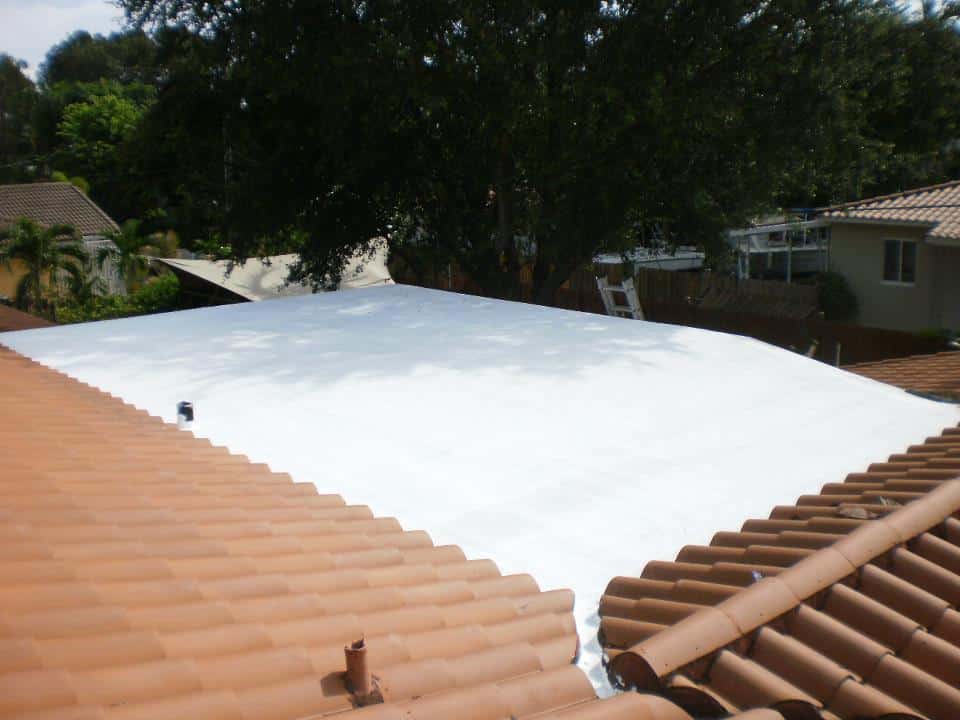
A well-selected roof coating can help create a renewed protective surface over an aging flat roof system. Depending on the product and the roof condition, coatings can improve water resistance, reflect sunlight, reduce surface temperature, and slow down weather-related wear. That can make them appealing for Miami property owners looking for a more budget-conscious way to extend service life.
But coatings are not magic. They perform best when they are part of a real roofing strategy, not a shortcut. The roof still needs sound substrate conditions, solid detailing, and surface prep that gives the coating a chance to bond and perform the way it should.
When a Flat Roof Coating Makes Sense
A coating often makes sense when the flat roof is weathered but still fundamentally serviceable. That could mean the membrane is aging, the surface is absorbing a lot of heat, minor seam or flashing maintenance is needed, or the owner wants to add a fresh waterproofing layer before conditions get worse. In these cases, a coating can be a practical way to protect the roof and stretch more value out of the existing system.
For Miami properties, coatings are especially attractive when the goal is to handle UV exposure better and create a more reflective surface. On the right roof, that can help reduce thermal stress and improve long-term performance. It can also be useful for some flat roof systems that are nearing the point where owners want a proactive upgrade rather than waiting for repeated leaks.
The key phrase is on the right roof. If water has been trapped beneath the system, if the insulation is compromised, if there are widespread soft spots, or if the roof has active structural problems, a coating is usually not the first thing to focus on. In those cases, the better long-term answer may be repair, section replacement, or a full reroof depending on the severity.
Silicone Roof Coatings: Strong Choice for Ponding Water Concerns
Silicone roof coatings are popular in South Florida because they generally handle standing water better than many other coating categories. On flat roofs where drainage is less than ideal, that can be a major advantage. Miami storms can overwhelm drains or reveal low spots quickly, so ponding resistance matters in the real world.
Silicone coatings also tend to hold up well against UV exposure, which is another reason they are frequently discussed for local roofs. For owners trying to extend the life of an existing flat roof without tearing everything off, silicone is often one of the first products worth evaluating.
That said, silicone is not automatically the best choice for every building. Surface prep still matters. Existing roof type matters. Dirt pickup, recoating considerations, and compatibility with the substrate all need to be discussed before assuming silicone is the answer. It is a strong option, not a universal one.
Acrylic Roof Coatings: Reflective and Cost-Conscious, but More Condition Dependent
Acrylic coatings are often chosen for their reflectivity and affordability. They can be a good fit when the roof has positive drainage and the owner wants a bright, energy-conscious surface that helps manage sun exposure. In a climate like Miami, the reflective benefit is easy to understand. Heat is constant, and reducing surface temperature can be part of a smart maintenance strategy.
The tradeoff is that acrylic coatings are usually less forgiving where ponding water is persistent. On a flat roof with drainage issues, that limitation matters. If the roof layout or existing wear pattern suggests water regularly sits in certain areas, acrylic may not be the strongest long-term choice without correcting those conditions first.
For some properties, acrylic still works very well. The difference is that roof selection has to be honest about the actual water behavior of the surface, not just what the owner hopes is happening after the rain stops.
Elastomeric Coatings: Flexible Category That Still Needs Careful Specification
Elastomeric is a broad term that usually points to coatings designed to stretch and move with the roof surface. That flexibility can be useful on roofs that experience expansion and contraction under Miami heat. It is one reason elastomeric systems often come up in both residential and commercial flat roof conversations.
Still, elastomeric does not mean one single product behavior. Some elastomeric systems overlap with acrylic-based performance, while others are formulated differently. The smart move is to ask what the product actually is, how it performs with water exposure, and whether it matches the roof type beneath it. Owners should not choose a coating based on a general label alone.
In practice, elastomeric coatings can be a solid part of a restoration plan, but they need the same level of project-specific evaluation as silicone or acrylic. There is no substitute for matching the product to the roof and the climate demands.
Surface Preparation and Drainage Are Just as Important as the Product
One of the biggest mistakes in roof coating projects is treating the product itself as the full solution. In reality, the coating is only as good as the preparation underneath it. The roof must be cleaned correctly, weak areas must be addressed, flashing details must be tightened up, and any needed repairs should happen before the coating is applied. Otherwise, the coating may only mask problems for a short time instead of solving them.
Drainage deserves special attention in Miami. If the flat roof has birdbaths, blocked drains, uneven slopes, or repeated ponding in the same sections, that should be part of the project discussion. A coating may still be used in some cases, but it should not distract from drainage defects that keep stressing the roof after every storm.
This is where experienced local roofing guidance matters. The best roof coating for flat roofs in Miami is not simply the most expensive product or the one with the flashiest marketing. It is the system paired with the right prep, repair scope, and realistic expectations for the roof you actually have.
Signs Your Flat Roof May Need More Than a Coating
Sometimes the most valuable answer a contractor can give is that a coating is not enough. If your flat roof has recurring interior leaks, widespread wet insulation, soft decking, major blistering, open seams across large areas, or long-term neglected maintenance, the smarter plan may involve repair sections or full replacement rather than coating over deeper failure.
This matters because a coating should extend value, not delay an unavoidable problem until it becomes more expensive. Miami weather is not gentle on compromised roofs. If the base system is already breaking down significantly, the owner is usually better served by dealing with the root issue directly.
A trustworthy evaluation should explain whether the roof is a restoration candidate or whether money spent on coating would be better redirected into a more durable fix.
Questions to Ask Before Choosing a Roof Coating
- Is my flat roof actually a good candidate for coating, or are there hidden moisture or substrate problems?
- Does the roof have drainage issues or ponding water that change which coating makes sense?
- What repairs or preparation need to happen before any coating is applied?
- Why is silicone, acrylic, or another elastomeric system the better fit for this roof?
- How will this coating perform in Miami heat, heavy rain, and hurricane-season conditions?
- What is the realistic goal of this project: maintenance extension, restoration, leak prevention, or short-term stopgap?
These questions help owners compare proposals based on fit and long-term value instead of just price per square foot.
Conclusion
The best roof coating for flat roofs in Miami depends on the roof condition, drainage behavior, sun exposure, and the kind of performance you need from the system. Silicone is often attractive where ponding water is part of the equation. Acrylic can be a strong reflective option on roofs with better drainage. Elastomeric systems can also work well when they are specified correctly. The right answer is less about buzzwords and more about matching the product to the roof honestly.
If you want a flat roof to last longer in South Florida, product choice matters, but inspection, preparation, and installation quality matter just as much. A smart coating project should protect your property and buy real time, not just cover up warning signs.
If you need help evaluating a flat roof in Miami-Dade, Broward, or Monroe County, contact All Pro Contractors at 305-707-8451. We help property owners determine whether coating, repair, or replacement is the better move for long-term protection.
#itpaystogowiththepros