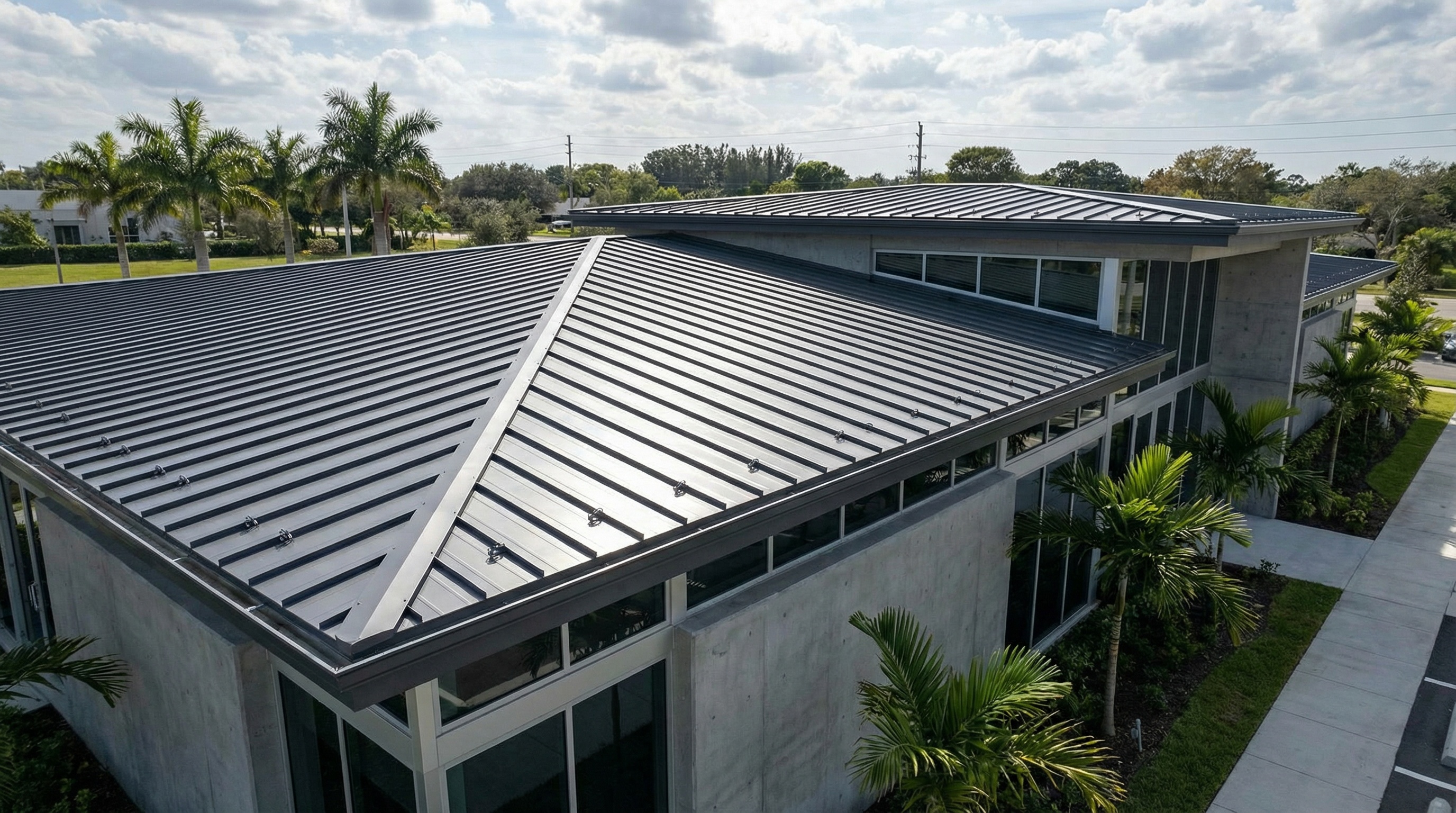
Introduction
If you are searching for the best flat roof system for Miami homes, you are probably trying to solve a very practical problem. You want a roof that can handle harsh sun, sudden downpours, year-round humidity, and the kind of storm pressure South Florida homeowners cannot afford to ignore. Flat and low-slope roofs can look simple from the street, but they are some of the most detail-sensitive roof systems on any home. The right system can give you years of strong waterproofing performance. The wrong one can lead to recurring leaks, trapped moisture, and expensive frustration.
In Miami, flat roofs are common on modern homes, additions, porches, carports, and certain commercial-style residential designs. They are also common on homes that mix multiple roof shapes on the same structure. That matters because a flat roof should never be treated like a standard steep-slope shingle roof. Waterproofing strategy, drainage planning, seam quality, edge details, penetrations, and substrate condition all matter much more than most homeowners realize at first.
At All Pro Contractors, we help property owners compare flat roofing options based on real South Florida performance, not just sales language. For most residential projects in Miami-Dade, Broward, and Monroe County, the conversation usually comes down to three main categories: TPO roofing, modified bitumen roofing, and restoration systems such as silicone coating when the roof is a good candidate. Each option can make sense in the right situation. The smartest choice depends on the roof’s condition, the budget, and the long-term goal for the property.
What Makes a Flat Roof System a Good Fit for Miami?
A good flat roof system in Miami has to do more than look clean. It has to move water effectively, resist UV exposure, hold up under heat, and stay reliable at seams, transitions, and penetrations. Flat roofs are often described as flat, but in practice they should have a slight slope to help direct water toward drains, scuppers, or gutters. When drainage is poor, even a decent roofing product can struggle.
Miami weather creates a demanding combination of stresses. Strong sun can wear down exposed surfaces. Wind-driven rain can test flashing details. Ponding water can expose weak spots on roofs with poor slope or tired materials. If a flat roof has HVAC curbs, skylights, vents, solar components, or wall transitions, every one of those areas becomes part of the waterproofing system. That is why the best flat roof system is never just about the membrane. It is also about design, preparation, and installation quality.
TPO Roofing for Miami Homes
TPO, or thermoplastic polyolefin, is one of the most talked-about low-slope roofing systems for homes and buildings in Florida. Homeowners often like it because it has a clean appearance, can be highly reflective, and is designed as a membrane system rather than a patchwork of individual pieces. In Miami’s heat, reflective roofing can be appealing because it may help reduce heat absorption at the roof surface.
A properly installed TPO roof can be a strong option for residential flat roof sections, especially when the homeowner wants a modern system with welded seams and a neat finished look. Seams are a major part of flat roof performance, and one reason TPO gets attention is that its seams are heat welded rather than simply overlapped in a more basic way. When those seams are done correctly, they can be a real strength of the system.
That said, TPO is not automatically the best answer for every roof. The condition of the substrate, the amount of foot traffic, the number of penetrations, and the quality of the installer all matter. On a roof with complicated details or a poor base, even a good membrane can underperform. TPO tends to make the most sense when the roof is being rebuilt or replaced with a system designed specifically around that membrane.
Modified Bitumen Roofing for South Florida Conditions
Modified bitumen remains a very common and practical flat roofing option in South Florida. It has been used for years on residential and commercial low-slope roofs because it is durable, familiar, and well suited to projects where multi-layer protection matters. For homeowners, modified bitumen is often attractive because it can provide a robust waterproofing assembly with a strong track record when installed correctly.
One of the reasons modified bitumen works well in Miami is that it is a system many experienced Florida roofers know thoroughly. It can be a smart choice for homes that need dependable waterproofing over patios, additions, garages, or main low-slope roof areas. It is also often chosen when the owner wants a system that feels substantial and proven rather than newer or more design-driven.
The key is making sure the roof is evaluated honestly. Not every modified bitumen roof should be repaired forever, and not every aging system is a good candidate for another overlay. If the substrate is compromised, if trapped moisture is present, or if repeated leak history suggests deeper failures, replacement may be the smarter investment than another short-term fix.
When a Silicone Roof Coating Makes Sense
Some Miami homeowners are not dealing with a roof that needs full replacement right away. Instead, they have a flat roof that is aging but still structurally serviceable. In that situation, a silicone roof coating may be worth discussing. A restoration coating is not a universal solution, but when the existing roof is dry, stable, and a good fit for restoration, it can extend service life and improve weather protection without the cost of a full tear-off.
Silicone coatings are often considered because they can help protect against UV exposure and can perform well in environments where standing water is a concern. That does not mean every roof with ponding water should simply be coated and forgotten. If the drainage design is poor or the underlying roof has major issues, the coating will not magically fix deeper structural or moisture problems. The roof first has to qualify for restoration.
For the right property, though, a silicone coating can be a practical middle-ground option. It is especially worth discussing when the goal is to improve performance and buy time while avoiding a premature full replacement. The contractor’s inspection matters here more than ever, because coating systems only make sense when the roof beneath them still has a solid foundation.
How to Choose Between TPO, Modified Bitumen, and Coating
The best flat roof system for Miami homes usually comes down to the roof’s current condition and the homeowner’s long-term plan. If the roof is failing and needs a true replacement, TPO or modified bitumen may be the better conversation. If the roof is aging but still in decent shape, a silicone coating may deserve consideration. If the roof has lots of complex details, penetrations, or past leak history, the safest option is often the one that gives the contractor the best path to rebuild those details correctly rather than cover them up.
Budget matters, but it should not be the only filter. The lowest number today can become the most expensive path later if the system is wrong for the roof. Homeowners should also think about maintenance expectations, energy goals, appearance, and how long they plan to keep the property. A forever-home decision may be different from a short-term holding decision, but both still need to be built around reliable waterproofing.
Why Drainage and Details Matter More Than Most Homeowners Expect
One of the biggest mistakes in flat roofing is focusing only on the field membrane and ignoring the details. Most flat roof problems start at transitions: around walls, penetrations, edge metal, scuppers, drains, skylights, or equipment curbs. If those areas are weak, the roof will usually tell on itself sooner or later.
Drainage is just as important. A quality flat roof system in Miami should be designed to manage heavy rain efficiently. If water sits too long, it places extra stress on seams, flashing, and vulnerable low spots. Good flat roof work is not just material selection. It is a package of slope planning, waterproofing details, and clean execution.
Questions to Ask Before You Approve a Flat Roof Proposal
- Is this roof a candidate for repair, restoration, or full replacement?
- How will drainage be improved or confirmed before the new system goes on?
- What happens at walls, penetrations, edges, and transitions?
- Is any wet or damaged substrate being removed and replaced?
- Why is this specific system the best match for this roof in Miami conditions?
- What maintenance should I realistically expect after installation?
Those answers tell you far more than a simple price comparison ever will.
Conclusion
If you want the best flat roof system for Miami homes, the real goal is not choosing the trendiest product. It is choosing the right waterproofing strategy for your roof shape, your property condition, and your long-term plans. TPO can be an excellent option for a clean, modern replacement system. Modified bitumen remains a dependable South Florida workhorse when installed correctly. Silicone coating can be a smart restoration move on the right roof. The best answer is the one that fits the roof honestly and is installed with care.
If you need help evaluating a flat or low-slope roof in Miami-Dade, Broward, or Monroe County, contact All Pro Contractors at 305-707-8451. We help homeowners compare flat roofing options with clear recommendations built for South Florida conditions.
#itpaystogowiththepros